
The Cell & its Parts
Before we start sharing more about our topic, let’s read and reflect on this:
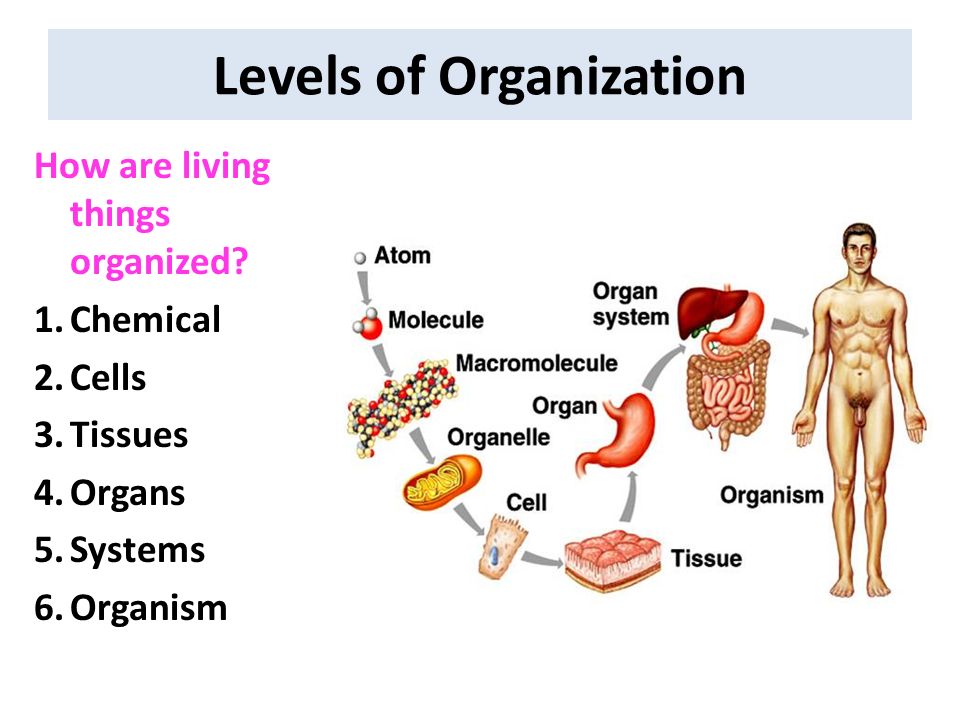
Anything in cosmos is made of matter- of course with the exception of energy which is behind all. Atoms are fundamental pieces of matter, thus, we could say that our whole Universe is a huge puzzle of atoms. If we could look inside the atoms, we could see that they are made up of three tiny kinds of particles called subatomic particles: protons, neutrons, and electrons. The protons and the neutrons make up the center of the atom called the nucleus and the electrons fly around above the nucleus in a small cloud. The electrons carry a negative charge and the protons carry a positive charge. In a normal (neutral) atom the number of protons and the number of electrons are equal. Often, but not always, the number of neutrons is the same, too.
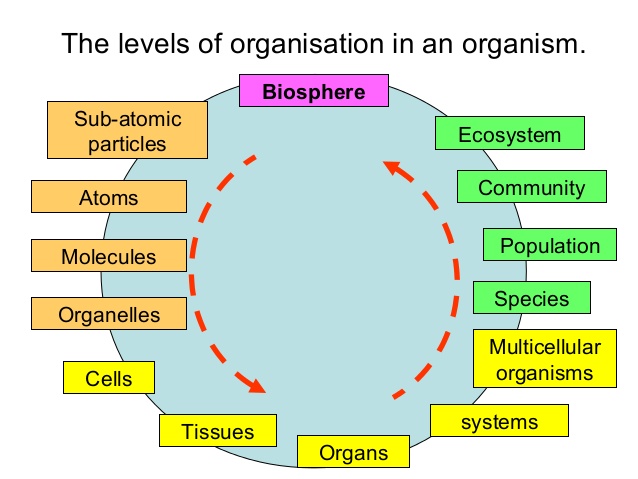
And then, complexity comes out of simplicity. Atoms can bond together in a molecule, also are not visible to the naked eye. When similar atoms combine together in varying numbers, molecules of different properties can be formed. But when similar molecules combine together in any numbers, a simple product is formed. Atoms and molecules are present in all objects and living things. The composition and density levels vary the thickness and form of the objects. In gases, the molecules are very loosely packed so that the molecules can flow around easily without colliding. In liquids, the packing is a bit more compact and so the particles are always together. But in solids the packing is very compact and hardly any movement to the molecules is allowed, giving the object a firm shape. Then, molecules can get together and make cells, the Basic structural, functional & biological units, the Building blocks of life. Cells emerged on Earth at least 3.5 billion years ago and were discovered by Robert Hooke in 1665. He gave them the name cell (Latin cella = small room). Then cells get together to make tissues, a variety of tissues makes organs, which are organized in organ systems and finally the organism as a whole is there. There are 10 trillion cells in a human organism. All cells come from pre-existing cells organized in tissues, organs and organ systems.
Human organism > organ systems > organs > tissues > cells > molecules > atoms > subatomic particles > energy
Now, you watch the lecture on the structure and the functions of the cell. Enjoy!

On Metabolism_Bolk’s companion

You can read more about cells and what is known in the field of cell biology in this book.
https://books.google.gr/books?id=FFfW4cH8PdcC&lpg=PP1&hl=el&pg=PP1#v=onepage&q&f=false

Dear colleague,
you have seen that “cells rely on the integration of structures & organelles in order to function“. If this holds true for the cell, what could we say holds true for
1. the human being and
2. the human society?
Use the cell as a metaphor and reflect on the “cell”-wisdom we could gain to better understand ourselves and the society. Add this paper to our study diary which you will submit to your tutor at the end of this lesson. Thank you

Almost all aspects of life are engineered at the molecular level, and without understanding molecules we can only have a very sketchy understanding of life itself. Francis Crick