
Why It Matters to Integrate Prenatal Sciences In the Anthropologist’s Practice and Research
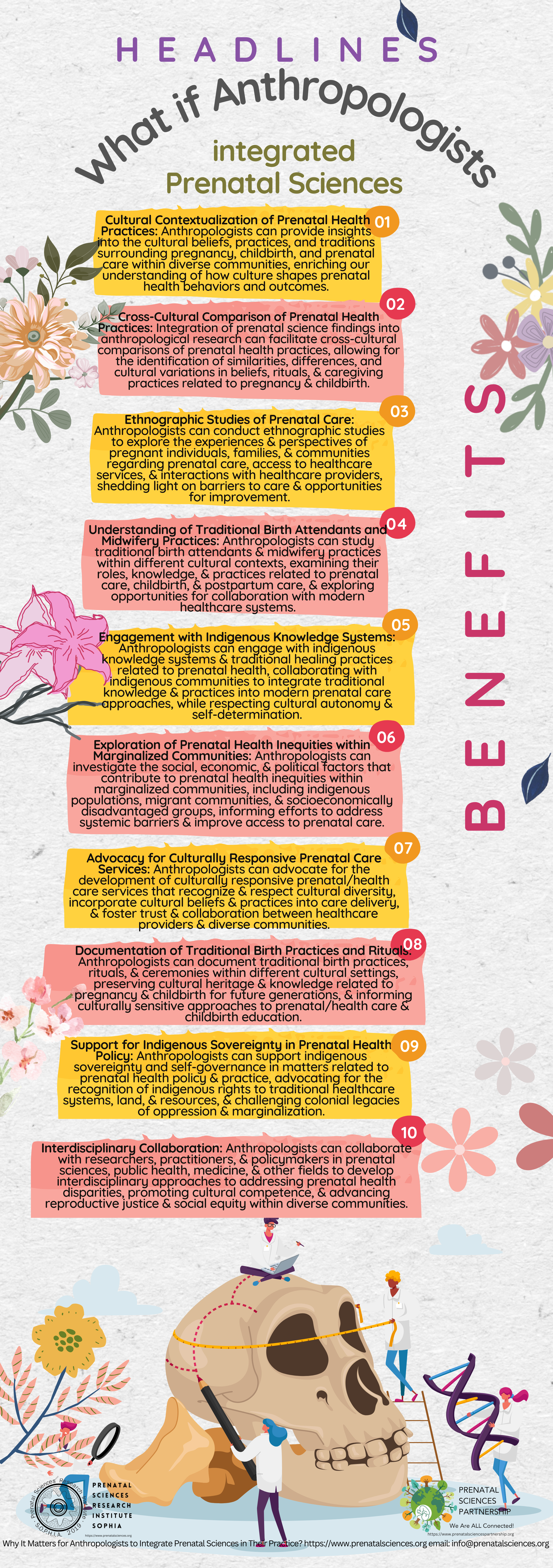
THE BENEFITS
Integrating prenatal sciences in an anthropologist’s practice or research offers several benefits. Anthropologists gain a deeper understanding of the complex interplay between prenatal experiences, cultural contexts, and social structures. They can explore how cultural beliefs, practices, and rituals surrounding pregnancy and childbirth shape individuals’ experiences and influence social dynamics within communities. By integrating prenatal sciences, anthropologists can bring a holistic perspective to their work, enriching their understanding of human development, cultural diversity, and the impact of prenatal factors on individuals and societies. Below you can see some of the benefits:
- Holistic understanding: By integrating prenatal sciences, anthropologists gain a comprehensive understanding of the psychological, biological, physiological, and cultural factors that influence human development during the prenatal period. This knowledge enhances their ability to analyze and interpret cultural practices, beliefs, and rituals surrounding pregnancy and childbirth.
- Cultural sensitivity: Anthropologists who integrate prenatal sciences can approach their research with greater cultural sensitivity. They can explore how different societies and communities perceive and interact with the unborn child, recognizing the diversity of beliefs, practices, and rituals related to prenatal care, pregnancy, and birth.
- Cross-cultural comparisons: Integrating prenatal sciences allows anthropologists to make more nuanced and insightful cross-cultural comparisons. They can examine how different cultural contexts shape prenatal experiences, birthing practices, and the social roles assigned to unborn children, providing a broader perspective on human reproductive and parenting practices.
- Uncovering hidden narratives: Anthropologists can use prenatal sciences to uncover hidden narratives and perspectives related to the experiences of pregnant individuals, families, and communities. They can explore the emotional, psychological, and social dimensions of prenatal life and childbirth, shedding light on the subjective experiences of the unborn child and their significance within cultural contexts.
- Collaborative research: Integrating prenatal sciences can facilitate interdisciplinary collaborations between anthropologists and researchers from fields such as biology, genetics, obstetrics, psychology and all prenatal sciences. This collaboration promotes a more comprehensive understanding of the prenatal period, enriches research findings, and fosters innovative approaches to studying human development, health and relationships.
THEIR WORK IS DIFFERENT
An anthropologist who has integrated prenatal sciences in their work brings an additional layer of understanding and analysis to their research compared to one who has not. They have a broader perspective on the influences of prenatal experiences on individuals, families, and communities. They can incorporate knowledge from prenatal sciences, such as embryology, fetal development, and the effects of prenatal factors on health and well-being. This integration allows for a more comprehensive examination of cultural practices, social norms, and the intergenerational transmission of knowledge related to pregnancy and childbirth. Thus:
- Depth of analysis: Anthropologists who integrate prenatal sciences have a deeper understanding of the many levels and aspects of human development during the prenatal period. They can incorporate this knowledge into their analyses, providing more nuanced interpretations of cultural practices, beliefs, and rituals related to pregnancy and childbirth.
- Multidimensional perspective: Anthropologists who integrate prenatal sciences consider the multidimensional aspects of the prenatal period, including biological, psychological, and cultural factors. This broader perspective allows for a more comprehensive understanding of the complexities and interconnections between cultural practices, beliefs, and the experiences of pregnant individuals and unborn children.
- Cultural sensitivity: Anthropologists who integrate prenatal sciences approach their research with greater cultural sensitivity, recognizing and respecting diverse cultural perspectives on prenatal life and childbirth. They engage in more meaningful and respectful interactions with the communities they study, fostering trust and collaboration.
- Interdisciplinary collaboration: Anthropologists who integrate prenatal sciences are more likely to engage in interdisciplinary collaborations with researchers from other fields. This collaboration facilitates the integration of diverse perspectives and methodologies, enriching the anthropological research process and its findings.
- Expanded research focus: Integrating prenatal sciences broadens the scope of anthropological research to include the prenatal period and its cultural significance. Anthropologists can explore topics such as prenatal care practices, cultural beliefs about fetal development, rituals surrounding birth, and the social roles attributed to unborn children, providing a more comprehensive understanding of human reproduction and parenting practices.
 Medical Anthropologist Michelle Sadler says: As an anthropologist working in health issues, prenatal sciences have made me aware of the huge impact of culture in rituals and customs surrounding conception, gestation, birth and the first years of life. These periods might be some of the most ritualized in history, across different cultures, and each culture imprints its core values into such rituals. Such core values, transmitted through rituals, have a huge impact in the kind of human beings we will become. Thus, prenatal sciences have allowed me to connect the impact of customs in the development and evolution of our species, and to understand the profound intergenerational impact generated by these customs.
THE CHANGES
To accommodate the new understanding that prenatal experiences have a profound impact, anthropologists would make certain changes in their practice. They would include the study of prenatal experiences and their cultural interpretations in their research design and methodologies. This may involve integrating qualitative approaches such as in-depth interviews, participant observation, and the collection of life histories to explore the social, cultural, and psychological dimensions of prenatal experiences. Anthropologists would also collaborate with experts from prenatal sciences and related fields to gain insights into the biological, physiological, and developmental aspects of the prenatal period. By incorporating this new understanding, anthropologists can provide more nuanced interpretations of cultural practices, social dynamics, and the intergenerational transmission of knowledge surrounding pregnancy and childbirth. More specifically:
- Re-evaluation of research methodologies: Anthropologists may re-evaluate their research methodologies to capture the experiences and perspectives of the unborn child. This may involve incorporating qualitative methods that allow for the exploration of subjective experiences, narratives, and cultural beliefs related to the unborn child’s agency and participation.
- Engaging with diverse stakeholders: Anthropologists may actively seek the perspectives of pregnant individuals, families, and communities to understand their beliefs, rituals, and practices that acknowledge the unborn child’s sentience and active participation. This may involve conducting interviews, participant observations, and collaborative research projects to capture a range of cultural perspectives.
- Ethical considerations: Anthropologists may reexamine their ethical frameworks to ensure the respectful inclusion and representation of the unborn child’s experiences and rights. This may involve obtaining informed consent from pregnant individuals and considering the ethical implications of studying sensitive prenatal experiences and cultural practices.
- Collaboration with other disciplines: Anthropologists may collaborate with experts in prenatal sciences, psychology, and related fields to gain a deeper understanding of the unborn child’s sentience and active participation. This interdisciplinary collaboration can inform the development of research frameworks and facilitate the integration of multiple perspectives into anthropological analyses.
- Dissemination of research findings: Anthropologists may prioritize disseminating research findings that promote awareness and understanding of the unborn child’s agency and participation. This may involve sharing research outcomes with relevant stakeholders, such as healthcare professionals, policymakers, and communities, to foster informed discussions and potentially influence cultural practices surrounding pregnancy and birth.
THE IMPACT
Imagine a world where anthropologists fully integrate prenatal sciences into their practice. In this world, the impact of their work resonates throughout society, bringing positive changes at individual, familial, societal, and even peace-building levels.
For the client or a pregnant individual, the integration of prenatal sciences in anthropological practice means a deeper understanding and validation of their experiences. Anthropologists collaborate with healthcare providers, integrating scientific knowledge with cultural practices, ensuring that prenatal care is holistic, respectful, and tailored to individual needs. Clients feel empowered, knowing that their emotional, psychological, and cultural well-being is valued and addressed.
Within families, the integration of prenatal sciences sparks open conversations and a shared appreciation for the unborn child’s agency and participation. Parents bond with their baby before birth, engaging in practices that promote emotional connection and support the child’s development. Siblings eagerly anticipate their new family member, fostering a sense of unity and inclusion. The family’s cultural heritage is celebrated, weaving a tapestry of beliefs and rituals that honor the unborn child’s presence.
At the societal level, the integration of prenatal sciences in anthropological research challenges existing norms and beliefs. Cultural practices that prioritize the well-being and agency of the unborn child gain recognition and support. Policies and healthcare systems are informed by evidence-based research, ensuring comprehensive and culturally sensitive care for pregnant individuals. Communities embrace diversity and inclusivity, fostering a sense of belonging for all, including the unborn child.
The impact extends even further, contributing to peace-building efforts. By recognizing the sentience and active participation of the unborn child, anthropologists highlight the interconnectedness of all human life. Their research findings inspire empathy, compassion, and understanding across cultural, social, and geopolitical divides. Society recognizes that the foundation of peace lies in nurturing and respecting life from its earliest stages, creating a more harmonious and compassionate world for generations to come.
ANTHROPOLOGISTS MATTER
Anthropologists are the storytellers of humanity, bridging cultures, communities, and the past and present. They embark on an adventure, unearthing hidden narratives and weaving together the tapestry of human existence. More specifically:
- Cultural preservation: Anthropologists preserve the essence of diverse cultures, documenting traditions, languages, and customs before they fade away. They safeguard the wisdom of past generations and ensure that cultural heritage endures, creating a mosaic of human experience for future generations to cherish.
- Empathy and understanding: Anthropologists cultivate empathy and understanding by immersing themselves in unfamiliar cultures. They listen to diverse voices, challenging preconceived notions and fostering appreciation for the richness and complexity of human life. Through their work, they promote inclusivity and respect for cultural differences.
- Illuminating human history: Anthropologists dig deep into the past, unearthing artifacts, ruins, and fossils that reveal the story of our ancestors. They reconstruct ancient civilizations, shedding light on the origins of human societies, technology, art, and belief systems. Their discoveries provide a sense of identity and connectedness to the human family.
- Challenging stereotypes: Anthropologists dismantle stereotypes by debunking misconceptions and challenging cultural biases. Through their research, they reveal the diversity and fluidity of human behavior, dismantling rigid notions of what is “normal” or “acceptable.” They promote a more nuanced understanding of human nature and foster tolerance.
- Global health and well-being: Anthropologists contribute to global health efforts by studying the cultural dimensions of health and illness. They understand that health is not merely the absence of disease but a holistic concept deeply intertwined with culture, beliefs, and social systems. Their insights inform healthcare policies and interventions, promoting culturally appropriate and effective approaches.
- Environmental sustainability: Anthropologists explore the relationship between humans and their environment. They highlight indigenous knowledge and sustainable practices that promote ecological balance and resilience. By studying human-environment interactions, they contribute to the urgent task of preserving our planet for future generations.
- Peace and conflict resolution: Anthropologists contribute to peace-building efforts by fostering understanding and dialogue between diverse communities. They study the root causes of conflicts, addressing social, cultural, and economic factors that contribute to tensions. Through their work, they facilitate reconciliation, respect, and cooperation among different groups.
- Future foresight: Anthropologists peer into the future, examining current trends and projecting their impact on societies and cultures. They anticipate social transformations, technological advancements, and global shifts, preparing us to navigate the complexities of an ever-changing world. Their insights guide policymakers, businesses, and individuals in making informed decisions.
Anthropologists matter because they unravel the threads that connect us all as human beings. They celebrate our diversity, challenge biases, and inspire us to embrace our shared humanity. Their work fosters understanding, empathy, and the hope of a more inclusive and harmonious world.